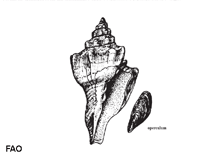
Gastropoda |
Neogastropoda |
Turbinellidae
Environnement : milieu / zone climatique / profondeur / gamme de distribution
Écologie
Récifal; profondeur 0 - 81 m (Réf. 83934). Tropical; 26°N - 9°S, 92°W - 73°E
Western Atlantic.
Longueur à la première maturité / Taille / Poids / Âge
Maturité: Lm ? range ? - ? cm Max length : 36.0 cm NG mâle / non sexé; (Réf. 83435); common length : 35.0 cm TL mâle / non sexé; (Réf. 355)
Description synthétique
Morphologie
Shell very large, heavy, fusiform. Sculpture of 8 to 10 prominent ribs angled at shoulder, 8 to 10 on last whorl. Columella with 3 strong folds. Colour: white, internally tinged with pink or orange.
This is one of the largest gastropods in the Atlantic Ocean (Ref. 355). Maximum depth from Ref. 109264. This species is found subtidal and offshore, in coral reefs, cienaga facies and mangroves, particularly on mud, rock, sand, and seagrass habitats (Ref. 83934).
Cycle de vie et comportement reproducteur
Maturité | Reproduction | Frai | Œufs | Fécondité | Larves
This species is a non-broadcast spawner. Life cycle does not include trocophore stage. Also Ref. 833.
Leal, J.H. 2003 Gastropods. p. 99-147. In Carpenter, K.E. (ed.). The living marine resources of the Western Central Atlantic. Volume 1: Introduction, molluscs, crustaceans, hagfishes, sharks, batoid fishes, and chimaeras. FAO Species Identification Guide for Fishery Purposes and American Society of Ichthyologists and Herpetologists Special Publication No. 5. 1600p. (Réf. 355)
Statut dans la liste rouge de l'IUCN
(Réf. 130435: Version 2025-2 (Global))
statut CITES (Réf. 108899)
Not Evaluated
Not Evaluated
Menace pour l'homme
Harmless
Utilisations par l'homme
Pêcheries: commercial
| FishSource |
Outils
Plus d'informations
Dynamique des populationsCroissance
Âges / tailles maximales
Longueur-poids rel.
Rel. longueur-longueur.
Fréquences de longueurs
Conversion de masse
Abondance
Cycle de vieReproductionMaturitéFéconditéFraiŒufsDéveloppement de l'œufLarves PhysiologieConsommation d'oxygène
Liées à l'hommeTimbres, pièces de monnaie, divers
Sources Internet
Estimations basées sur des modèles
Température préférée
(Ref.
115969): 25.9 - 28.1, mean 27.5 (based on 160 cells).
Vulnérabilité de la pêche
Low to moderate vulnerability (26 of 100).
Catégorie de prix
Unknown.