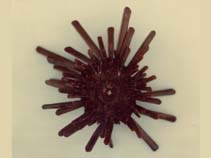
Echinoidea |
Camarodonta |
Echinometridae
البيئة: الوسط / المنطقة المناخية / نطاق العمق / نطاق التوزيع
البيئة
مرتبطة بالشعاب; نطاق العمق 0 - 30 m (مرجع 95661). Tropical
Indo-Pacific, except Arabian Gulf, Pakistan, West India and Bay of Bengal.
الطول عند النضج الأول / الحجم / وزن / العمر
النضج: Lm ? range ? - ? cm
Occurs in shallow water reef areas at depths of 0 to 25 m (Ref. 800). Found on a reef crest (Ref. 97449). Favors depressions on the reef associated with pinnacles, corals or between rocks (Ref. 102370).
دورة الحياة وسلوك التزاوج
النضج | التكاثر | وضع البيض | بيض | الخصوبة | اليرقات
Members of the class Echinoidea are gonochoric. Fertilization is external. Brooding is common, eggs are held either on the peristome, around the periproct or deep into the concavities on the petaloids. Life cycle: Embryos develop into planktotrophic larvae (echinoplateus) and live for several months before they sink to the bottom using their tube feet to adhere on the ground where they metamorphose into young urchins.
Schoppe, S. 2000 A guide to common shallow water sea stars, brittle stars, sea urchins, sea cucumbers and feather stars (echinoderms) of the Philippines. Times Media Private Limited, Singapore. 144 p. (مرجع 800)
حالة القائمة الحمراء للاتحاد الدولي لحفظ الطبيعة والموارد الطبيعية
(مرجع 130435: Version 2025-2 (Global))
حالته حسب اتفاقية سايتس (مرجع 108899)
Not Evaluated
Not Evaluated
خطر للأنسان
استخدامات بشرية
| FishSource |
أدوات
مزيد من المعلومات
علم البيئة الغذائيةالمواد الغذائية (الفرائس)
التركيبة الغذائية
استهلاك الأغذية
مفتريسات
الديناميكيات السكانيةنمو
الحد الأقصى للأعمار/الأحجام
علاقة الطول بالوزن.
علاقة الطول بالطول.
الطول- الترددات
التحويل الجماعي
الوفرة
دورة الحياةالتكاثرالنضجالخصوبةوضع البيضبيضتطور البيضةاليرقات علم وظائف الأعضاءاستهلاك الأوكسجين
ذات الصلة بالبشرطوابع بريدية وعملات معدنية ومتنوعة
مصادر علي الأنترنت
تقديرات تستند إلى النماذج
درجة الحرارة المفضلة
(Ref.
115969): 24.6 - 29.3, mean 28 (based on 1903 cells).
فئة السعر
Unknown.