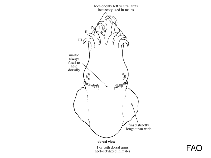
Cephalopoda |
Sepiida |
Sepiadariidae
পরিবেশ: পরিবেশ / জলবায়ু অঞ্চল / গভীরতার পরিসীমা / বিতরণ পরিসীমা
বাস্তুসংস্থান
তলদেশ বিহারী. Tropical
Indo-West Pacific: Australia and Indonesia.
প্রথম পরিপক্কতার সময় দৈর্ঘ্য / আকৃতি / ওজন / বয়স
পরিপক্কতা : Lm ? range ? - ? cm
জীবনচক্র এবং প্রজনন আচরণ
পরিপক্কতা | প্রজনন | ডিম ছাড়া | ডিমসমূহ | ডিম্বধারন ক্ষমতা | শুককীট
Members of the class Cephalopoda are gonochoric. Male and female adults usually die shortly after spawning and brooding, respectively. Mating behavior: Males perform various displays to attract potential females for copulation. During copulation, male grasp the female and inserts the hectocotylus into the female's mantle cavity where fertilization usually occurs. Life cycle: Embryos hatch into planktonic stage and live for some time before they grow larger and take up a benthic existence as adults.
IUCN 2012 IUCN Red List of Threatened Species. Version 2012.1. IUCN 2012. IUCN Red List of Threatened Species. www.iucnredlist.org. Downloaded in June 2012. (সূত্র 90363)
আইইউসিএন রেড লিস্টের অবস্থা
(সূত্র 130435: Version 2025-2 (Global))
CITES অবস্থা (সূত্র 108899)
Not Evaluated
Not Evaluated
মানুষের জন্য হুমকি
Harmless
মানুষের ব্যবহার
| FishSource |
হাতিয়ার
আরো তথ্য
ট্রফিক বাস্তুতন্ত্র খাদ্যদ্রব্য (শিকার)
পথ্য উপাদান
খাদ্য গ্রহণ
শিকারী প্রাণী সমূহ
জনসংখ্যার গতিশীলতাবৃদ্ধি
সর্বোচ্চ বয়স / আকার
দৈর্ঘ্য-ওজন সম্পর্ক।
দৈর্ঘ্য-দৈর্ঘ্য rel.
দৈর্ঘ্য-ফ্রিকোয়েন্সি
গণ রূপান্তর
প্রাচুর্য
জীবনচক্রপ্রজনন পরিপক্কতা ডিম্বধারন ক্ষমতা ডিম ছাড়া ডিমসমূহডিমের বিকাশশুককীট শারীরবিদ্যাঅম্লজান ব্যবহার
মানব সম্পর্কিতডাকটিকিট, মুদ্রা, বিবিধ।
ইন্টারনেট সুত্র
মডেলের উপর ভিত্তি করে অনুমান