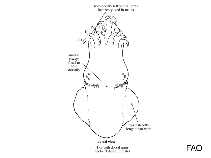
Cephalopoda |
Sepiida |
Sepiadariidae
Lingkungan: lingkungan / zona iklim / kisaran kedalaman / jangkauan distribusi
Ekologi
Dasar (demersal). Tropical
Indo-West Pacific: Australia and Indonesia.
Panjang pada saat jatuh tempo pertama / Ukuran / Berat / umur
Kematangan: Lm ? range ? - ? cm
Siklus hidup dan perilaku kawin
Kematangan | Reproduksi, perkembang biakan | Pemijahan | telur-telur | Fekunditas | Larva
Members of the class Cephalopoda are gonochoric. Male and female adults usually die shortly after spawning and brooding, respectively. Mating behavior: Males perform various displays to attract potential females for copulation. During copulation, male grasp the female and inserts the hectocotylus into the female's mantle cavity where fertilization usually occurs. Life cycle: Embryos hatch into planktonic stage and live for some time before they grow larger and take up a benthic existence as adults.
rujukan utama
Acuan | Koordinator | mitra
IUCN 2012 IUCN Red List of Threatened Species. Version 2012.1. IUCN 2012. IUCN Red List of Threatened Species. www.iucnredlist.org. Downloaded in June 2012. (Acuan 90363)
Status IUCN Red List
(Acuan 130435: Version 2025-2 (Global))
status CITES (Acuan 108899)
Not Evaluated
Not Evaluated
ancaman kepada manusia
Harmless
penggunaan manusia
| FishSource |
Alat, peralatan
informasi lanjut
Ekologi trofikItem makanan (mangsa)
Komposisi makanan
Konsumsi makanan
Pemangsa
Dinamika populasiPertumbuhan
Maks. usia / ukuran
Panjang-berat rel.
Panjang-panjang rel.
ukuran frekuensi
Konversi massa
Kelimpahan
FisiologiKonsumsi oksigen
Yang berhubungan dengan manusiaPerangko, koin, dll.
Sumber internet
Estimasi berdasarkan model