Cephalopoda |
Octopoda |
Octopodidae | Octopodinae
Ambiente: milieu / zona climática / intervalo de profundidade / gama de distribuição
Ecologia
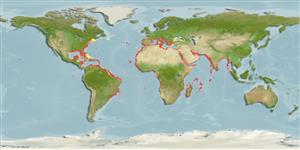
Benthic; intervalo de profundidade 5 - 200 m (Ref. 275). Tropical; 46°N - 28°S, 96°W - 96°E (Ref. 275)
Atlantic, Indian Ocean and the Mediterranean.
Comprimento na primeira maturidade / Tamanho / Peso / Idade
Maturidade: Lm ? range ? - ? cm Max length : 9.0 cm ML macho/indeterminado; (Ref. 417); peso máx. Publicado: 56.40 g (Ref. 123036)
Minimum depth from Ref. 83938. This is a subtidal species found in sandy-muddy bottoms (Ref. 83938).
Ciclo de vida e comportamento de acasalamento
Maturidade | Reprodução | Desova | Ovos | Fecundidade | Larvas
Members of the class Cephalopoda are gonochoric. Male and female adults usually die shortly after spawning and brooding, respectively. Mating behavior: Males perform various displays to attract potential females for copulation. During copulation, male grasp the female and inserts the hectocotylus into the female's mantle cavity where fertilization usually occurs. Life cycle: Embryos hatch into planktonic stage and live for some time before they grow larger and take up a benthic existence as adults.
Schneider, W. 1990 FAO species identification sheets for fishery purposes. Field guide to the commercial marine resources of the Gulf of Guinea. Prepared and published with the support of the FAO Regional Office for Africa. Rome: FAO. 268 p. (Ref. 417)
Categoria na Lista Vermelha da IUCN
(Ref. 130435: Version 2025-2 (Global))
Categoria CITES (Ref. 108899)
Not Evaluated
Not Evaluated
Ameaça para o homem
Utilização humana
| FishSource |
Ferramentas
Mais informação
Ciclo de vidaReproduçãoMaturidadeFecundidadeDesovaOvosDesenvolvimento dos ovosLarvas FisiologiaConsumo de oxigénio
Relacionado com o ser humanoSelos, moedas, diversos.
Fontes da internet
Estimativas baseadas em modelos
Temperatura preferida
(Ref.
115969): 14 - 27.6, mean 23.6 (based on 762 cells).
Vulnerabilidade da pesca
Low vulnerability (10 of 100).