Ascidiacea |
Aplousobranchia |
Didemnidae
Milieu: milieu / Klimaatzone / Diepte / verspreidingsgebied
Ecologie
Sessile; diepte 7 - 38 m (Ref. 1661). Tropical
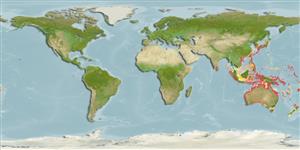
Indo-West Pacific. tropical, temperate.
Lengte bij maturiteit / Grootte / Gewicht / Leeftijd
Maturiteit: Lm ? range ? - ? cm Max length : 0.0 cm WD mannelijk / geslacht onbekend; (Ref. 1678)
Assumed maximum diameter of spicules from Ref. 1678. Filter-feeder (Ref. 68823).
Levenscyclus en paargedrag
Maturiteit | Voortplanting | Paaien | Eieren | Fecunditeit | Larven
Members of the class Ascidiacea are hermaphroditic; both cross- and self-fertilization is typical. Life cycle: Eggs develop into lecithotrophic larva before metamorphosing into benthic adults.
Kott, P. 2005 Catalogue of Tunicata in Australian Waters. Queensland Museum, Brisbane, Australia Department of the Environment and Heritage. (Ref. 1134)
Status op de Rode Lijst van het IUCN
(Ref. 130435: Version 2025-2 (Global))
CITES status (Ref. 108899)
Not Evaluated
Not Evaluated
Gevaar voor de mens
Gebruik door de mens
| FishSource |
Tools
Meer informatie
Trofische ecologieVoedsel (prooien)
Dieetsamenstelling
Voedselconsumptie
Predatoren
PopulatiedynamicaGroei
Max. leeftijden / maten
Lengte-gewicht rel.
Lengte-lengte rel.
Lengtefrequenties
Massaconversie
Abundantie
LevenscyclusVoortplantingMaturiteitFecunditeitPaaienEierenOntwikkeling van de eierenLarven FysiologieZuurstofverbruik
Menselijk gerelateerdPostzegels, munten, diversen.
Internetbronnen
Schattingen op basis van modellen
Gewenste temperatuur
(Ref.
115969): 20.5 - 28.8, mean 27.2 (based on 264 cells).
Kwetsbaarheid van de visserij
Low vulnerability (10 of 100).
Prijsklasse
Unknown.